The natural stone industry is very susceptible to crises. The best-seller, the paving stone, became superfluous as more and more roads were paved. The great economic crisis at the end of the 1920s also hit the granite industry particularly hard. Around 1930, there were said to be 12,000 unemployed stonecutters in the Bavarian Forest. This was a drastic decline that meant starvation for many people.
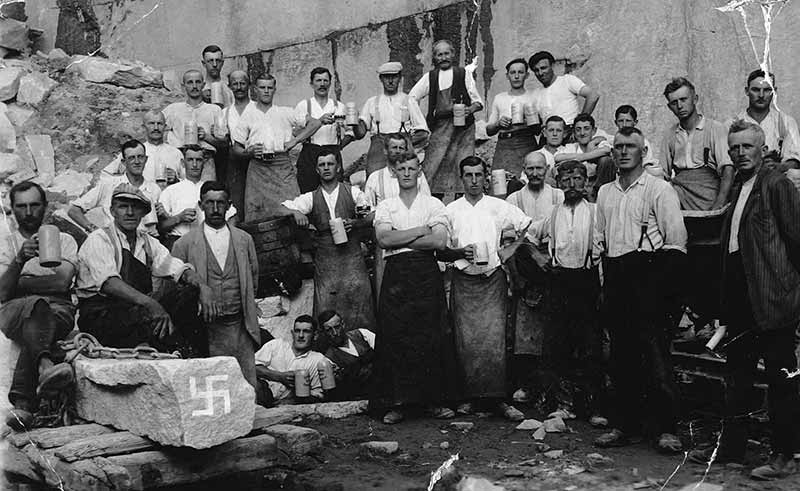
The massive increase in government contracts beginning with the Nazi seizure of power in 1933 brought a boom to the stone industry once again. In this context, let’s take a look at the photo from 1934 of the Hintertiessen quarry near Hauzenberg; “Under the swastika” is written above it.
This photograph raises questions. The place and year are correct, but the swastika was retouched in afterwards. The Nazi ideology was probably attributed to those photographed later on. Naturally, the attractive economic situation aroused enthusiasm among the stonemasons. Politically, however, most of them leaned towards the Social Democrats or even the Communists. As we can see: The issue of faked photos is not a new one.
The fact is that the granite industry had provided many people in the poor Bavarian Forest with work and a livelihood since the end of the 19th century. A confident, proud, and decidedly independent profession had emerged. However, as we’ve just heard, an economic downturn could bring this livelihood to an abrupt end.
What’s more, working in the quarries was a dangerous and back-breaking job that crippled more than a few people or even cost them their lives. It was a long time before effective help was available for those affected. In Hauzenberg, a mutual aid society founded in 1866 alleviated the greatest need. The stonecutters in this association helped each other out when misfortune struck and accidents occured. The society still exists today.
I’ll tell you more about the work in the quarry in a moment. Continue left around the corner of the quarry wall.